 THE CRESCENT FOUNDATION
STEP 01
Assign the lot
Every batch is assigned a unique lot number before it is sent for testing. The same number appears on the vial label and the certificate, so each record points to one material.

The Crescent Foundation
Every lot Crescent Bioresearch supplies is measured by an independent laboratory before it is listed, and the full certificate is published under its lot number. The endotoxin result is printed as a value, never as a word alone.
compounds in the catalog, each with a published certificate
independent measurements on every lot before it is listed
of listed lots tested by a third-party laboratory
number most certificates leave off the page: the endotoxin value
The Foundation
Industrial mission
To return the certificate of analysis to what it was meant to be: a set of measurements a research entity can check, carried by a record that cannot be quietly revised.
Crescent Bioresearch supplies laboratory compounds and reagents for in-vitro research. The Foundation is the standard those compounds are held to, written down and published so it can be checked.
The goal
A sector in which the endotoxin line carries a number, every test carries its USP chapter and the certificate exists before the product does.
Research entities set their own acceptance criteria. A certificate that prints the measurement lets each one apply its criterion before the material reaches a model.
The process
Four steps, in the same order, for every lot.
STEP 01
Every batch is assigned a unique lot number before it is sent for testing. The same number appears on the vial label and the certificate, so each record points to one material.
STEP 02
A third-party laboratory with no stake in the result measures identity by FTIR (USP <197A>), purity and content by HPLC (USP <621>) and bacterial endotoxin by gel-clot LAL (USP <85>).
STEP 03
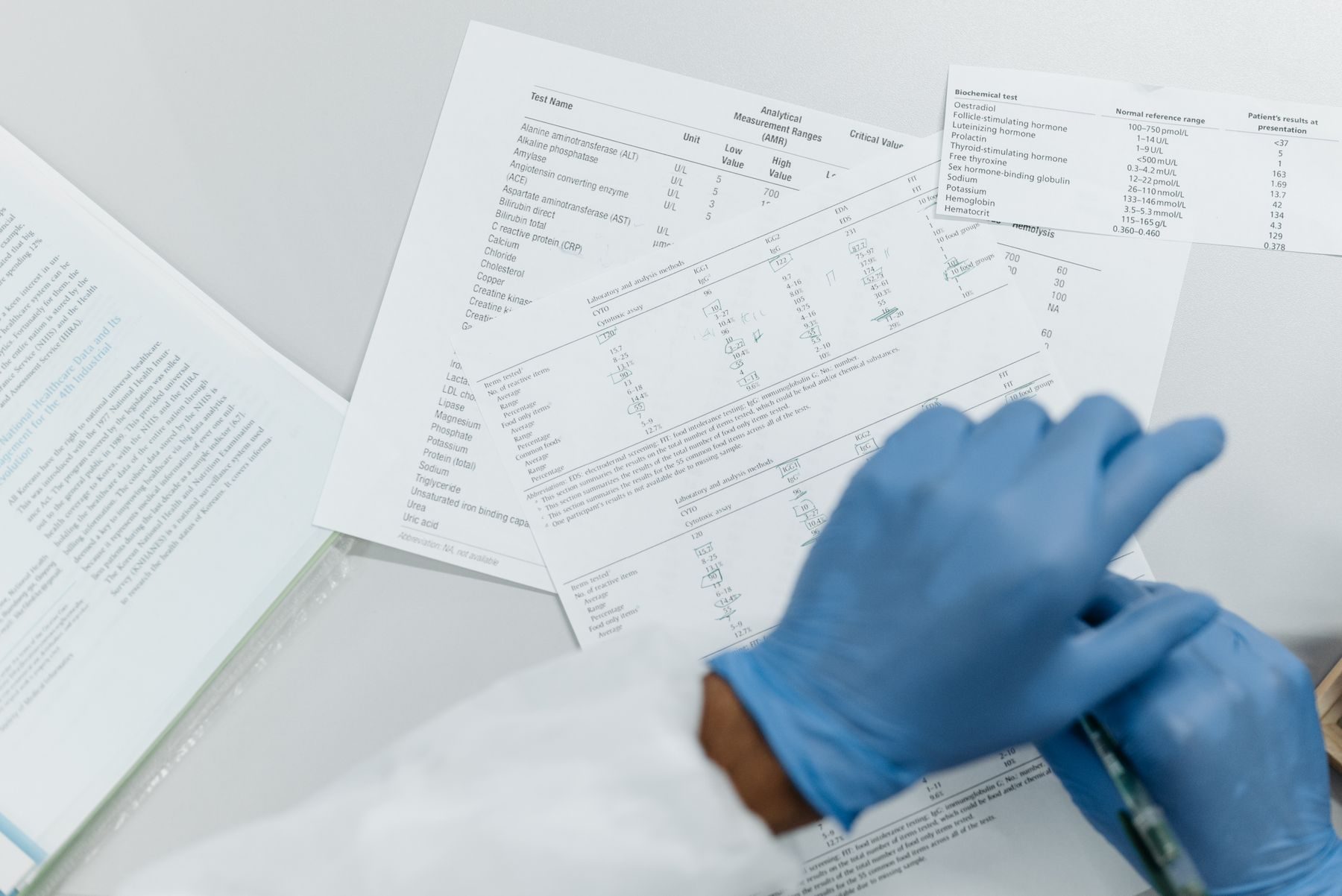
The full certificate, signed by the analysts who ran it, is published under its lot number before that lot is offered. The record comes first.

STEP 04
Each new lot brings a new certificate. Superseded certificates stay in the public library, so any vial can be traced to the measurements made on it.
Transparency
Testing is common across the laboratory compound sector. A record that can be examined is not. Switch between the two standards.
Testing
Three methods answer three unrelated questions. A strong result on one says nothing about the others.
What is it?
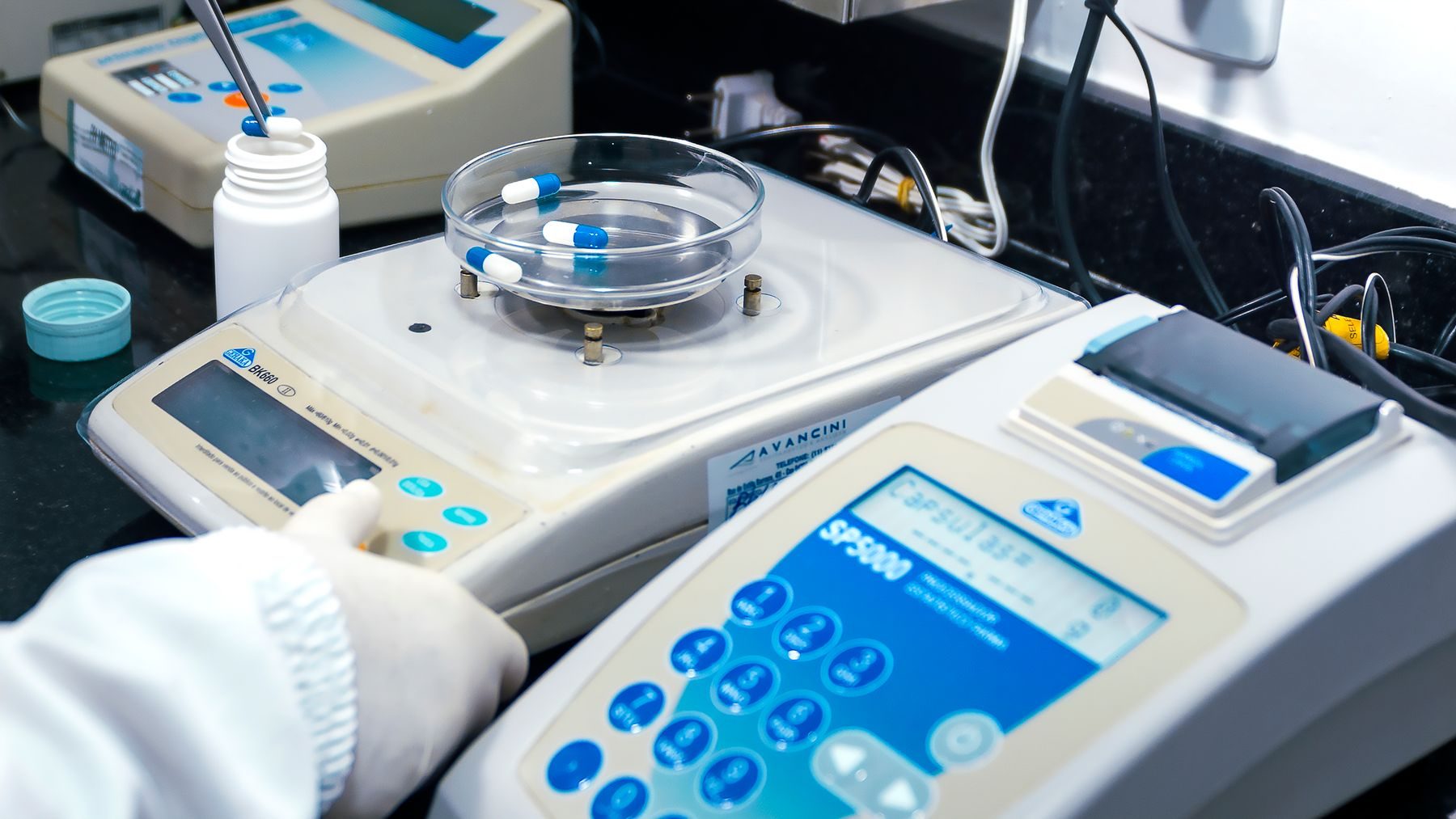
Identity · FTIR, USP <197A>
Fourier-transform infrared spectroscopy compares how the sample absorbs infrared light with the characteristic bands of the named compound. A purity figure for the wrong compound means nothing, so identity is confirmed first.
How much of it is there?
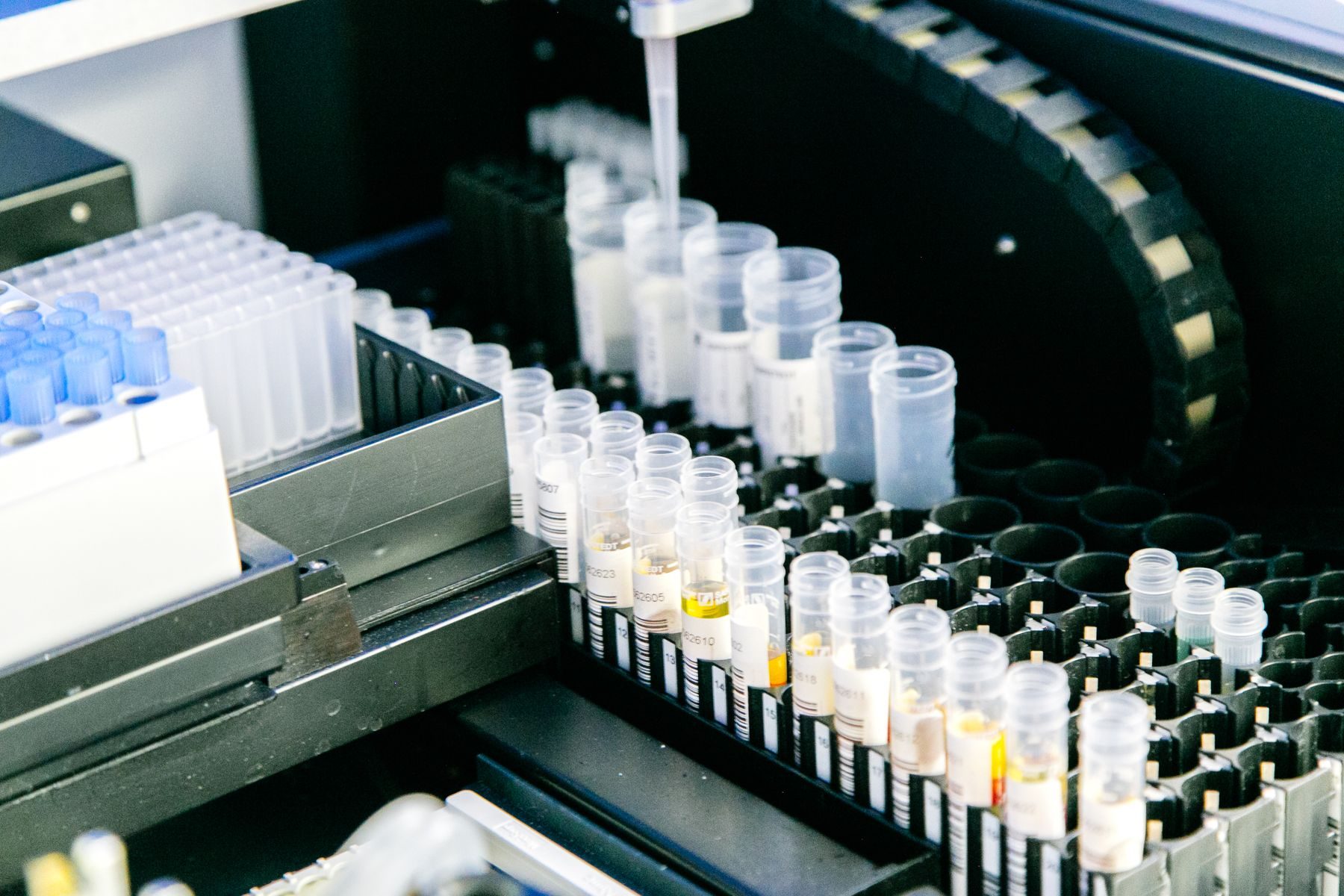
Purity and content · HPLC, USP <621>
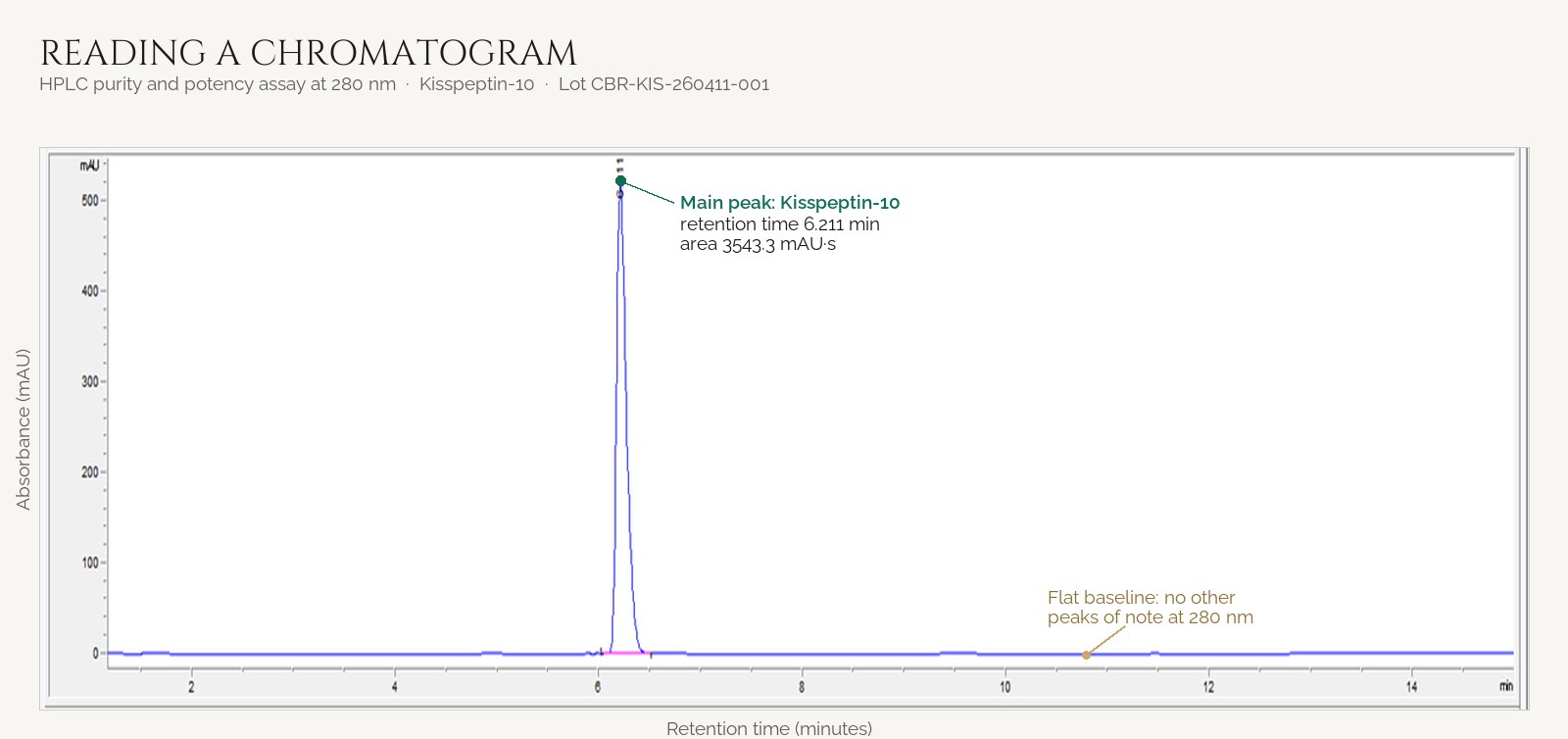
High-performance liquid chromatography separates the sample into its components. Purity is the main peak’s share of the chromatogram; content is the same method read against a reference standard and reported in milligrams.
What else is in it?
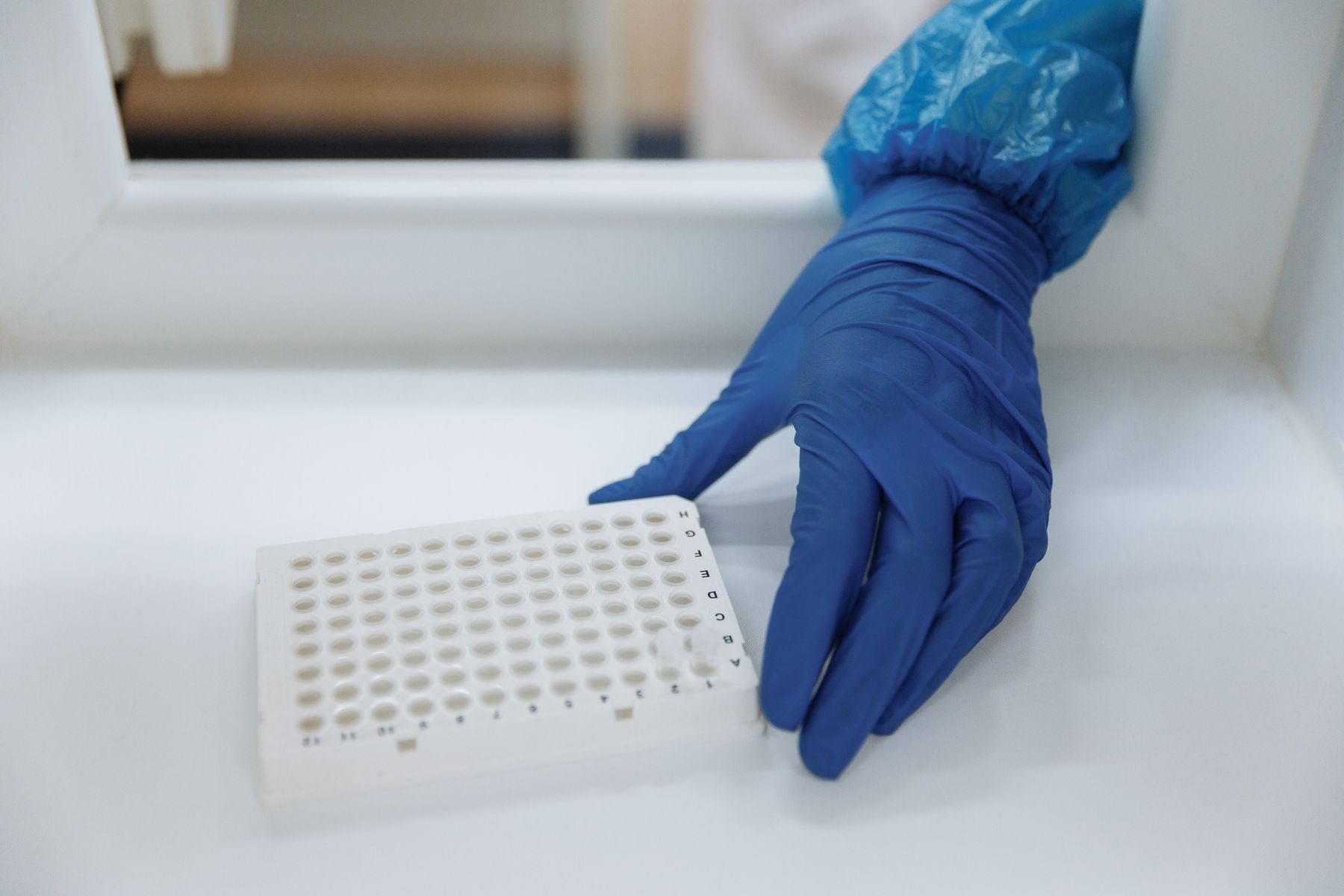
Bacterial endotoxin · Gel-clot LAL, USP <85>
Endotoxin is a lipopolysaccharide from Gram-negative bacteria, biologically active far below anything a purity chromatogram can detect. It has its own test, and the result is printed as a number.
100×Endotoxin difference
In 2003, two commercial preparations of recombinant Hsp70 with the same protein content and similar enzymatic activity behaved differently in macrophages. One carried more than a hundred times the endotoxin of the other, and the investigators traced the entire effect to that contamination. A purity figure could not separate the two preparations. Only the endotoxin value could. Gao and Tsan, The Journal of Biological Chemistry, 2003.
The record
Select a line to highlight it on the page and read what it records.
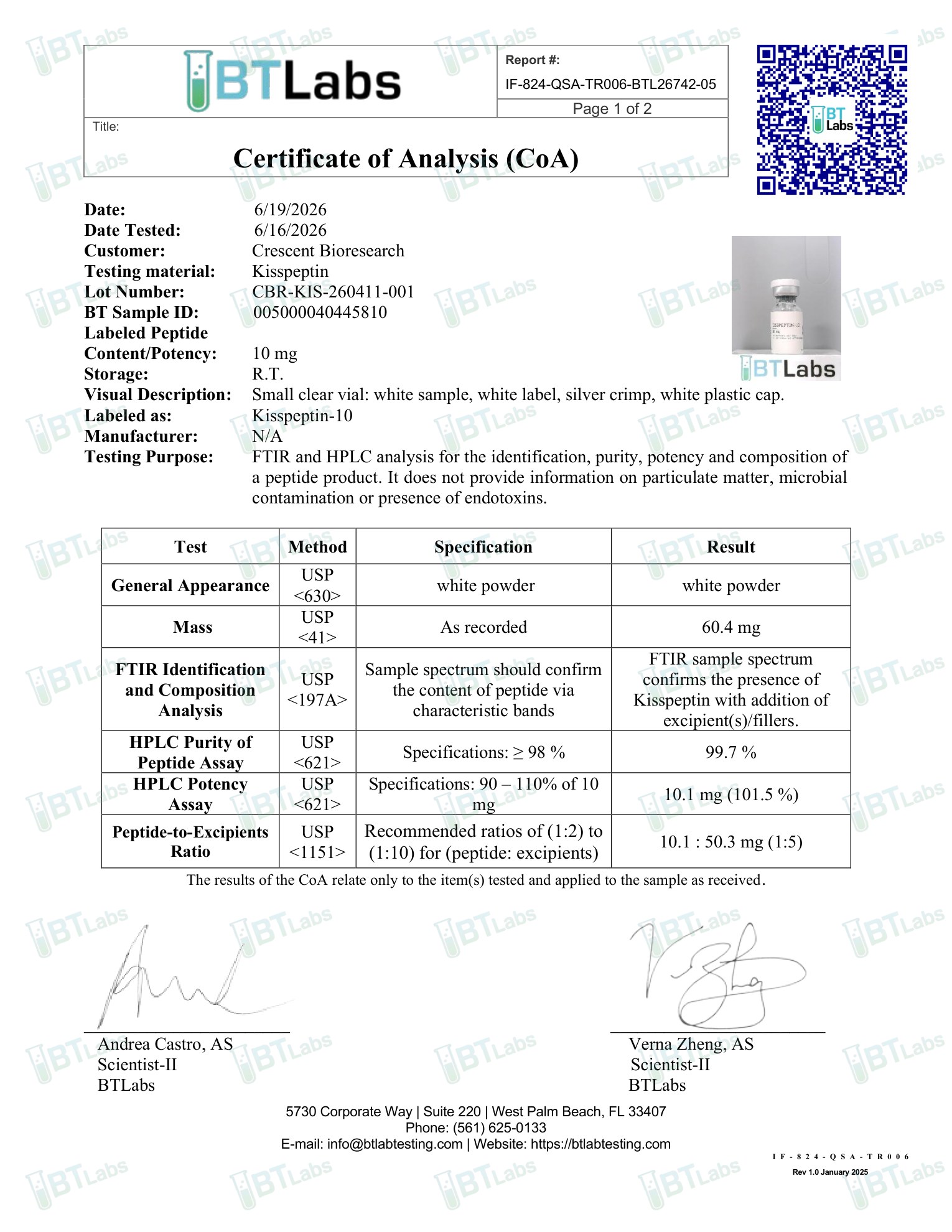
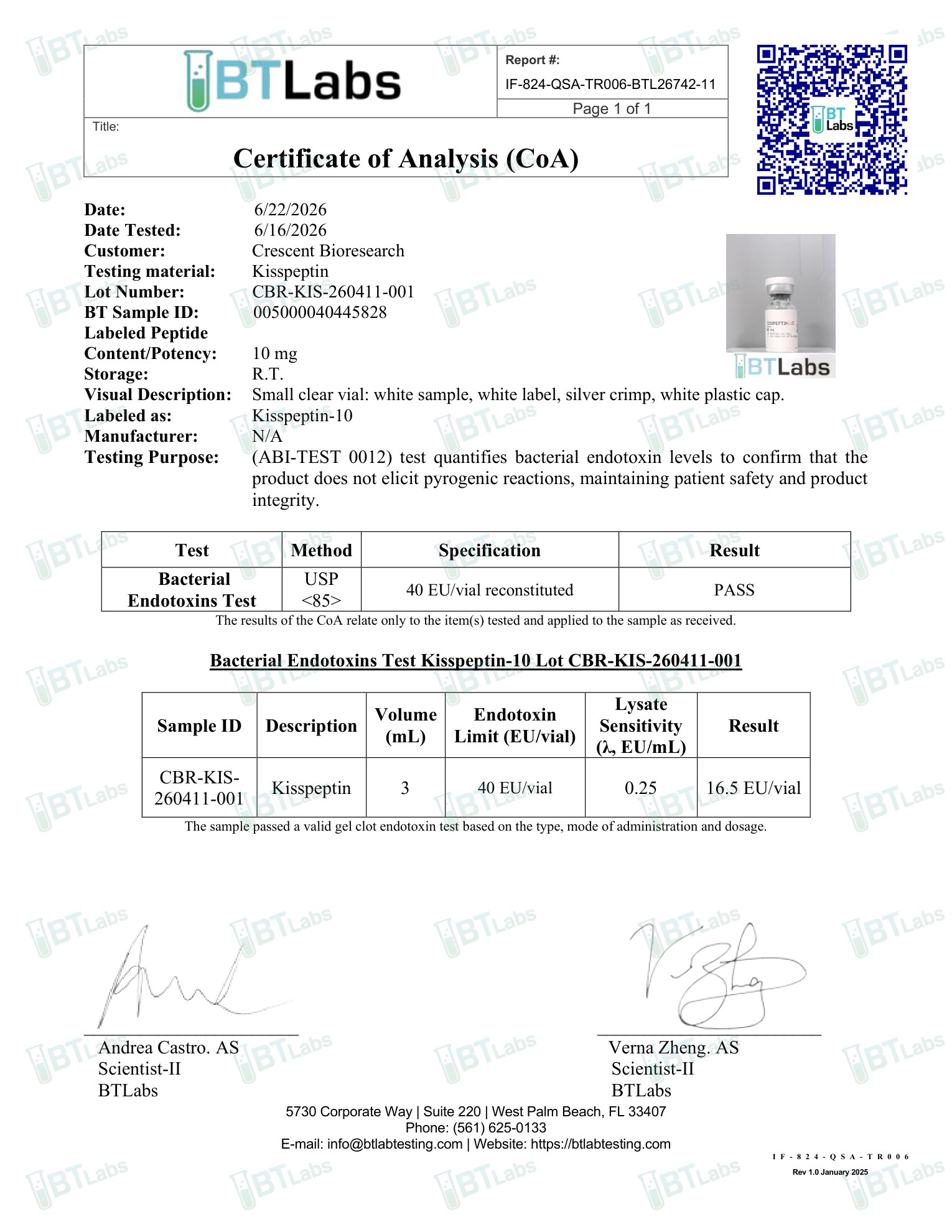
Kisspeptin-10, lot CBR-KIS-260411-001. BTLabs reports IF-824-QSA-TR006-BTL26742-05 and -11. Open the annotated certificate
Endotoxin
Published, not only passed. Against an example limit of 350 EU per vial, a lot at 5 EU and a lot at 345 EU print the same word. Drag the value. The verdict does not move until the limit is crossed.
Measured endotoxin
5.0 EU per vial
Verdict printed
PASS
Tools
The chromatogram behind the purity figure, and a converter for the endotoxin value.
HPLC at 280 nm, Kisspeptin-10, lot CBR-KIS-260411-001.
Per vial, per millilitre or per milligram: the same material in different terms.
Public library
Every vial carries a lot number. The same number opens its record.
Records

Published in a single library beside the certificates, under the OSHA Hazard Communication Standard.
Safety data sheet libraryRefrigerated transit where a compound’s stability profile calls for it, with the recorded storage condition stated on the certificate.
Certificate libraryCrescent Discovery Series
Reading from the Crescent Discovery Series.
The Crescent Foundation exists so the material behind a study can be examined, line by line, by anyone.